






2026 Chevy Equinox vs. Toyota RAV4: Which Compact SUV Wins?
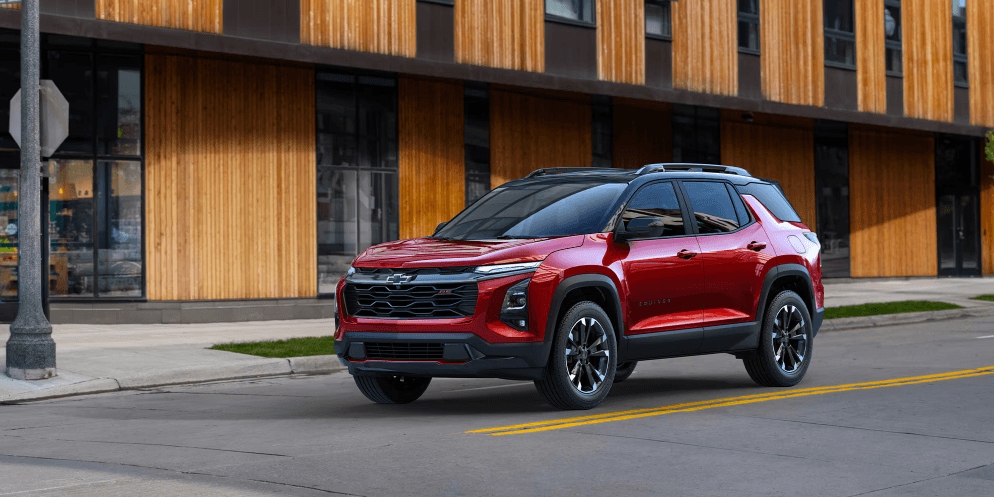
The compact SUV segment just got more interesting. The 2026 Toyota RAV4 lineup now goes all-hybrid, while the 2026 Chevrolet Equinox sticks with a proven gas-powered turbo engine. You’re really choosing between hybrid efficiency at a higher upfront cost or straightforward gas power with a lower price of entry.
We’ll walk through both vehicles trim by trim, compare performance and cargo room, and help you figure out which one actually fits how you drive around Florence, KY and into Cincinnati. If you’d rather see one of these in person, you can browse our new inventory anytime.
2026 Chevrolet Equinox: Comfort, Value, and Everyday Practicality
Chevrolet trimmed the Equinox lineup for 2026, dropping the base LS and gas LTZ. What’s left covers value, sportiness, and adventure in three focused trims. Every Equinox comes with a 1.5L turbocharged four-cylinder producing 175 hp, rated at 184 lb-ft of torque with front-wheel drive and 203 lb-ft with all-wheel drive, an 11.3-inch touchscreen with Google Built-In, an 11-inch Driver Information Center, heated front seats, a heated steering wheel, and the full Chevy Safety Assist suite.
Equinox LT, RS, and ACTIV Trims Explained
- LT: 17-inch aluminum wheels, cloth seating, all core tech included standard
- RS: sport-tuned suspension, 19-inch machined wheels, Evotex synthetic leather seating, available Midnight Edition package
- ACTIV: all-terrain tires, unique 17-inch machined-face wheels, vertical grille, black badging, a uniquely tuned suspension, available AWD, optional sueded microfiber seats and white two-tone roof
The ACTIV is new territory for the Equinox, Chevrolet’s first adventure-focused trim in this lineup. It narrows the gap on ground clearance and outdoor readiness, though it still isn’t built for the same towing duty as the RAV4’s Woodland trim.
Front-wheel-drive Equinox models send 184 lb-ft through a CVT, while AWD versions route the full 203 lb-ft through an 8-speed automatic. Fuel economy comes in at an EPA-estimated 26/29/27 mpg city/highway/combined for FWD, and 25/29/26 for AWD.
Takeaway: The Equinox lineup keeps things simple: three well-defined trims, one engine, and a lower cost of entry than the all-hybrid RAV4.
Ride Comfort, Interior Design, and Everyday Features
Inside, the Equinox offers 104.3 cubic feet of passenger volume across five seats, with 40.9 inches of front legroom and 39.9 inches in the rear. Front headroom sits at 40.0 inches, rear at 39.2 inches, and shoulder room measures about 58 inches up front. U.S. News rates the interior as well-made and contemporary, describing a roomy cabin that stays comfortable even for taller occupants, with front seats supportive enough for longer drives.
Cargo space is a weaker point for the Equinox: 29.8 cubic feet behind the rear seats and 63.5 cubic feet with them folded, both figures the RAV4 beats. Worth noting if cargo capacity is a top priority for your household.
On safety, the IIHS rated the Equinox “Good” in the updated moderate overlap front and updated side crash tests, though it missed Top Safety Pick status due to results in the small overlap test. Standard safety tech includes more than 15 features, wireless Apple CarPlay and Android Auto, and standard Adaptive Cruise Control, with available blind zone steering assist, rear cross-traffic braking, 360-degree HD surround vision, traffic sign recognition, and a rear camera mirror.
Takeaway: The Equinox delivers a comfortable, well-equipped cabin for daily driving, even if its cargo room doesn’t lead the segment.
2026 Toyota RAV4: Hybrid Power and Versatile Capability
Every 2026 RAV4 trim is now a hybrid. That shifts the fuel-economy conversation entirely for anyone cross-shopping the Equinox and RAV4.
RAV4 LE, SE, XLE Premium, Woodland, XSE, and Limited Trims Explained
The LE and SE trims keep things simple, built around value and efficiency. Step up to XLE Premium and you get SofTex heated front seats, a leather-trimmed steering wheel, and a power moonroof. The Woodland trim brings all-terrain tires, standard AWD, Rigid Industries LED fog lights, raised black roof rails and cross bars, red-orange accents, and all-weather mats. XSE adds 20-inch black alloy wheels, SofTex and suede upholstery, and ventilated front seats. Limited sits at the top, loaded with the most premium features in the lineup.
The standard RAV4 hybrid uses a 2.5L powertrain paired with a CVT, producing 226 hp in FWD form or 236 hp with AWD. Toyota also offers a plug-in version making 324 hp with an estimated 50 miles of electric range, at a considerably higher price. The AWD system is electronic on-demand, driven by a rear electric motor rather than a mechanical driveshaft.
Takeaway: Toyota made hybrid the standard across every RAV4 trim for 2026, not an add-on option.
All-Hybrid Lineup and Fuel Efficiency
Fuel economy varies by trim and drivetrain:
- LE/SE/XLE Premium FWD: up to 47/40/43 mpg
- LE/SE AWD: up to 45/39/42 mpg
- XLE Premium AWD: up to 45/38/41 mpg
- XSE/Limited AWD: up to 43/37/41 mpg
- Woodland AWD: up to 41/35/38 mpg
This is the single biggest differentiator for buyers deciding between the Equinox and Toyota’s hybrid RAV4.
Takeaway: If minimizing fuel costs is your top priority, the RAV4’s all-hybrid lineup has a clear, honest advantage here.
Performance and Fuel Economy Compared
Pairing equivalent trims helps clarify the shopping decision. Equinox LT lines up against RAV4 LE, both value-focused entry points, though the RAV4 LE’s hybrid system delivers notably better fuel economy right out of the gate.
On the road, the Equinox’s turbo four offers quick, punchy acceleration that feels lively around town, useful for merging onto I-75 during a Cincinnati commute. The RAV4’s hybrid system trades some of that immediate punch for smoother, quieter power delivery and a meaningful mpg advantage, especially on longer highway stretches.
Consider the fuel-cost gap this way: if you drive around 12,000 miles a year, an Equinox averaging 27 mpg combined burns roughly 444 gallons annually, while a RAV4 averaging 43 mpg combined burns about 279 gallons. That’s a gap of roughly 165 gallons a year, or around $578 annually at $3.50 a gallon. How long it takes the RAV4’s mpg edge to pay off against any price difference between the two vehicles depends on that upfront cost gap, which you’ll want to confirm directly with pricing at the time of purchase, but it’s a useful, non-marketing way to frame the tradeoff.
Takeaway: The RAV4 wins on fuel economy outright; the Equinox counters with a livelier, more traditional driving feel and a lower purchase price to offset the fuel savings.
All-Wheel Drive, Towing, and Outdoor Capability
Toyota clearly leads in this category:
- RAV4 AWD, properly equipped: up to 3,500 lbs towing
- RAV4 FWD/LE: up to 1,750 lbs
- Equinox with AWD: up to 1,500 lbs
- Equinox with FWD: up to 800 lbs
For anyone hauling a small camper or boat to a Northern Kentucky lake for the weekend, that towing gap matters, and we want to be upfront about it.
That said, the Equinox ACTIV brings genuine off-pavement capability with its all-terrain tires and raised ground clearance, and AWD is available across the lineup for better traction in rain or light snow. If you’re financing a vehicle built for occasional trailer duty, it’s worth exploring financing options and matching the towing math to your actual needs.
Takeaway: The RAV4 is the stronger tow vehicle by a wide margin; the Equinox ACTIV offers solid all-around traction without the same hauling capacity.
Interior Comfort and Cargo Space
Passenger space splits interestingly between the two:
- Front legroom: RAV4 41.0 in vs. Equinox 40.9 in
- Rear legroom: Equinox 39.9 in vs. RAV4 37.8 in
- Cargo behind second row: RAV4 up to 37.8 cu ft vs. Equinox 29.8 cu ft
- Max cargo: RAV4 up to 70.4 cu ft vs. Equinox 63.5 cu ft
Still, neither of these tops the compact SUV segment for outright cargo volume, and the Equinox answers with the roomier back seat, leading the RAV4 by more than two inches of rear legroom.
Takeaway: For raw cargo room, the RAV4 has the edge over the Equinox, though both trail a couple of hybrid competitors in this specific measure.
Technology and Driver-Assistance Features
The Equinox’s 11.3-inch touchscreen with Google Built-In gives drivers native Google Maps and Assistant, along with wireless Apple CarPlay and Android Auto. Standard Adaptive Cruise Control and the Chevy Safety Assist suite, including Automatic Emergency Braking, Lane Keep Assist with Lane Departure Warning, and Forward Collision Alert, come on every trim.
The RAV4 counters with Toyota Safety Sense 4.0 (TSS 4.0) standard across the lineup, the first Toyota model to get it. It includes an Enhanced Pre-Collision System with better motorcycle and cross-traffic detection, plus Proactive Driving Assist and Lane Change Assist. Screen size starts at 10.5 inches with a 12.3-inch multi-info display, and the Limited trim offers an available 12.9-inch screen, JBL Premium Audio, and a panoramic roof.
On crash testing, IIHS has not yet completed evaluation of the redesigned 2026 RAV4, with results expected later in the model year; no Top Safety Pick determination is available yet for this generation. Other 2026 Toyota SUVs missed the award due to headlight and updated moderate overlap test results, a different reason than the Equinox’s miss, which came down to its small overlap front result.
Takeaway: Both SUVs offer strong, comparable safety tech; the differences come down to screen size preferences and specific feature sets rather than a clear overall winner.
Which Compact SUV Fits Your Lifestyle?
Best for Commuters and City Drivers
If your week is mostly Florence streets and the run into Cincinnati, the Equinox makes the easier case. It starts a few thousand under the RAV4, and that gap doesn’t come out of the equipment list. The big Google Built-In touchscreen, the digital driver display, the heated steering wheel, and adaptive cruise are all standard on the entry trim, which isn’t something every compact SUV can say at this price.
Best for Everyday Comfort and Rear-Seat Room
Most trips are about carrying people, not luggage, and that’s where the Equinox holds up well. Rear passengers get more legroom than they do in the RAV4, which you notice on a longer drive with teenagers in back or a car seat pushing the front seat forward. The RAV4 has the bigger cargo hold, so if your trips lean more toward gear than passengers, weigh that honestly.
Best for Towing and Weekend Hauling
This one goes to Toyota, and we’d rather just say so. A properly equipped RAV4 tows more than twice what an Equinox can manage. If a small camper, a couple of jet skis, or a loaded utility trailer is part of the plan, the RAV4 is the more capable vehicle and it isn’t a close call.
Best for Kentucky Winters and Gravel Roads
Closer than you’d think. These two sit at almost exactly the same ride height, so neither has a real advantage on a snowed-in side street or a gravel campground road. All-wheel drive is available on any Equinox trim, and the ACTIV adds all-terrain tires and its own suspension tuning. The RAV4’s Woodland trim goes further, but mostly by way of its factory tow hitch, which is a hauling advantage rather than a traction one.
Both are well-built compact SUVs, and the answer comes down to which column matters more to you. The RAV4 wins on fuel economy, cargo room, and towing. The Equinox wins on price, standard equipment, and rear-seat space. We’d rather you drive away confident in your choice than push you toward one badge over another.
Test Drive the 2026 Equinox or RAV4 at Tom Gill Chevrolet
Specs and numbers only tell part of the story. The best way to settle which compact SUV wins for your own driveway is to get behind the wheel. Our team at Tom Gill Chevrolet in Florence, KY can walk you through current Equinox trim availability, financing options, and how it stacks up against what you’ve been considering elsewhere.
Contact our team to schedule a test drive. We’ll help you check out real-world comfort, cargo space, and drivability side by side, no pressure, just honest answers to your questions.
0 comment(s) so far on 2026 Chevy Equinox vs. Toyota RAV4: Which Compact SUV Wins?