






Chevy Check Engine Light: Common Causes and When to Worry
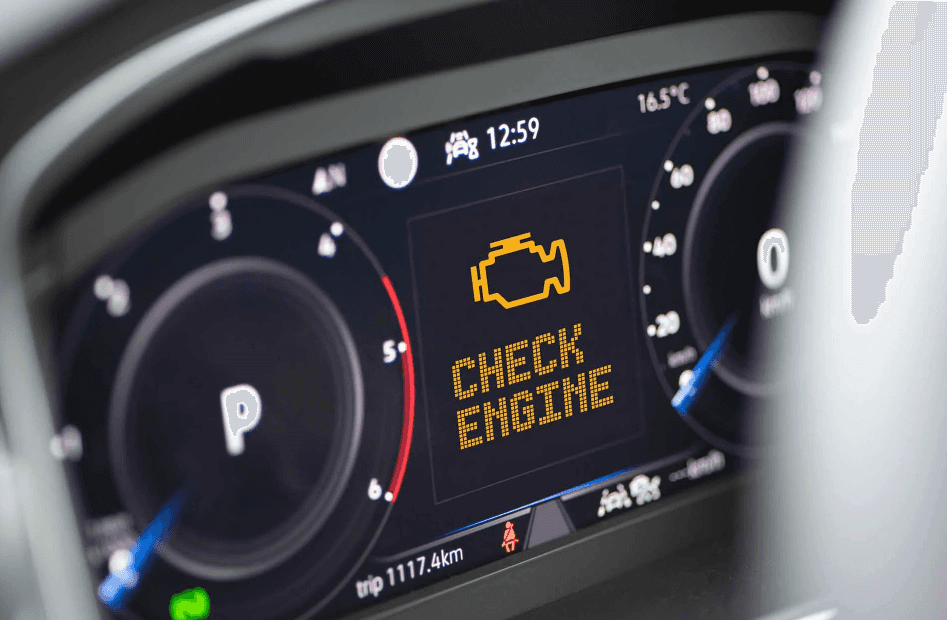
That little orange engine icon on your dash has a way of ruining an otherwise good drive. Whether you’re commuting on I-75 or running a work truck for your business, seeing it pop on raises an immediate question: keep driving, or pull over now? This guide breaks down what the check engine light means, walks through the common causes we see on Chevy vehicles, and tells you when it’s fine to keep going versus when to get help fast. If you’d rather skip ahead and get answers directly, you can contact our service team anytime.
What Does a Chevy Check Engine Light Mean?
The check engine light, officially called the Malfunction Indicator Lamp (MIL), turns on when your vehicle’s OBD-II system detects a problem in the engine or emissions system. Your car can feel completely normal while this light is on. The system picked up on something a sensor detected, not something you’d necessarily notice from the driver’s seat. That gives you a head start on repairs before small issues turn into expensive ones.
Solid Light vs. Flashing Light: Key Differences
This is the single most important thing to understand about your check engine light, and it’s worth committing to memory.
A solid, steady light generally points to a non-emergency issue: maybe a loose gas cap or a failing oxygen sensor. It’s generally safe to keep driving for a short while, but you should get it looked at soon rather than putting it off indefinitely.
A flashing light is a different story. This usually means an active engine misfire is happening right now, and continuing to drive risks serious damage to your catalytic converter, a much more expensive repair than whatever caused the misfire in the first place. If your light is flashing, stop driving and get service as soon as possible.
Common Symptoms That May Accompany the Warning
Symptoms that show up alongside the warning can tell you a lot about what’s going on. Watch for:
- Shaking or vibration in the steering wheel, seat, or idle
- Noticeable power loss or hesitation when accelerating
- Rough or uneven idling
- Popping or backfiring sounds from the exhaust
- A drop in fuel economy, sometimes before any other symptom appears
If you’re noticing any of these along with the light, that’s a stronger signal something needs prompt attention rather than a routine check.
Most Common Causes of a Chevy Check Engine Light
There isn’t one single answer to why a check engine light comes on. Several issues tend to show up again and again, and none is universally more common than the others.
Loose or Damaged Gas Cap
One common and easily fixed cause is a loose or damaged gas cap. When the cap doesn’t seal properly, fuel vapors escape through what’s called an EVAP leak, and the system flags it. Tightening the cap often clears the light after a few driving cycles, though it can take a day or two for the light to reset on its own.
Faulty Oxygen Sensor
Your oxygen sensor measures how much unburned oxygen is in the exhaust, helping the ECU (Engine Control Unit) balance the air-fuel mixture. Most vehicles have multiple sensors positioned before and after the catalytic converter. A failing sensor often causes rough idling, stalling, sluggish acceleration, or poor fuel economy.
Replacement intervals typically fall somewhere around 60,000 to 90,000 miles, but check your owner’s manual for the specific number since it varies by vehicle. A related code doesn’t always mean the sensor itself is bad; wiring issues, exhaust leaks, or fuel problems can produce similar symptoms.
Worn Spark Plugs or Ignition Coils
Spark plugs and ignition coils work together to ignite the fuel mixture in each cylinder. Worn plugs or weak coils often lead to rough running, sluggish performance, misfires, or stalling, though they don’t always trigger the check engine light right away. Replacement intervals vary depending on plug type, generally landing somewhere in the 30,000 to 100,000 mile range. Again, your owner’s manual is the best source for your specific vehicle’s recommendation.
Catalytic Converter Problems
The catalytic converter converts toxic combustion gases into far less harmful exhaust. Most vehicles have at least one, and some have two or more. When it’s struggling, you might notice a rotten-egg smell, a sign it isn’t properly converting hydrogen sulfide. Catalytic converter trouble is frequently the downstream result of failed ignition components or worn plugs that let unburned fuel reach the converter, which is part of why addressing spark plug issues early matters.
Mass Airflow Sensor Issues
The mass airflow sensor measures incoming air to help determine the right fuel mix. When it’s dirty or failing, or when there’s an intake leak, you might notice erratic idle, bumpy acceleration, or sluggish throttle response. This sensor is often overlooked, but it plays a big role in how your engine feels day to day.
Other Engine and Emissions System Concerns
Beyond these five, a handful of other issues can trigger the light: timing or camshaft misalignment, worn belts or gears, low coolant leading to overheating, starter or ignition problems, fuel line issues, fuel injection malfunctions, faulty emissions components, and even a broken head gasket. Guessing at the cause rarely works well.
Why Reading Diagnostic Trouble Codes Matters
A diagnostic scan is always the first step. When a technician connects a scan tool, it pulls a diagnostic trouble code, or DTC, a five-character code where each position means something. The letter identifies the system, P for powertrain being the most common on a check engine light. The second character tells you whether it’s a universal OBD-II code or one GM defined specifically for Chevrolet vehicles, which matters because manufacturer-specific codes often give a more precise picture. The last digits describe the fault itself. What the code doesn’t tell you is which part failed. It identifies the system and the symptom, and a single code can have several underlying causes, which is why it’s a starting point rather than an answer.
Some codes get more specific than others. Single-cylinder misfire codes in the P0301 through P0308 range identify exactly which cylinder is misfiring, which speeds up diagnosis considerably. Others point toward a general area that still needs a physical inspection. A P0442 for a small EVAP leak might be nothing more than the loose gas cap we mentioned earlier, or it might be a cracked hose somewhere in the system, and finding out usually means putting smoke through the EVAP lines to see where it escapes. A P0171 for a lean condition could be a vacuum leak, a dirty mass airflow sensor, or a fuel delivery problem. Same code, three very different repairs.
What You Can Safely Check Yourself
Some check engine light situations don’t require an immediate trip to the shop. If you’re comfortable with basic vehicle maintenance, there are a few things worth checking on your own before assuming the worst.
- Check that your gas cap is on tight and not visibly cracked or damaged.
- Look for anything obviously loose or disconnected under the hood, like a hose or wiring connector.
- If you have the tools and confidence, inspect spark plugs for wear, though sensor or plug replacement is best left to a technician if you’re not familiar with the process.
- Many auto parts stores loan out code readers so you can pull the stored code in the parking lot before your appointment.
- If your Chevy has the Remote Access plan through OnStar, you can view a Vehicle Status Diagnostics Report covering tire pressure, oil life, and odometer readings, updated each time you drive. It’s useful general information, but it won’t identify the exact failed part or specific trouble code behind your check engine light.
Even if you manage to clear the light yourself, that doesn’t mean the underlying problem is fixed. Resetting the light without addressing the actual cause can mask a real issue, particularly with emissions-related faults, and it will likely come back.
If your check engine light is still on after tightening the cap or a day of driving, that’s a good sign it’s time for a professional look. Schedule a service appointment and let a technician confirm what’s actually going on before it turns into something bigger.
When to See a Trained Technician Immediately
If your light is flashing, stop driving as soon as it’s safe to do so and get the vehicle to a shop. Continuing to drive with an active misfire risks catastrophic damage to your catalytic converter and potentially other engine components.
Even with a solid light, some issues aren’t simple DIY territory. Failing catalytic converters and transmission problems, in particular, aren’t always clear-cut, and they need a trained eye to diagnose accurately. This matters most for drivers who don’t have room for downtime, whether that’s a daily commuter relying on their car for the drive along I-75 or a small business owner whose work truck needs to be back on the road as soon as possible. Getting an accurate diagnosis the first time saves you from repeat visits and guesswork repairs.
It’s also worth noting that EVs work differently. Check engine lights are a combustion-engine concern, and electric vehicles like the Blazer EV use separate warning indicators for their systems, so don’t expect the same light to apply there.
Trust Tom Gill Chevrolet With Your Diagnosis
Our Diagnostic Process
When that light comes on, guessing isn’t a great strategy. Our diagnostic process starts with connecting an OBD-II scanner to pull the stored code, looking up what system that code points to, and then performing a physical inspection to confirm the actual cause before any repair work begins. Because a code can point to a system without naming the exact failed part, that inspection step is what separates an accurate repair from a repeat visit.
Why Drivers Choose Us
We use Chevrolet-specific diagnostic software built for these vehicles, and our factory-trained technicians know Chevy models inside and out, including newer vehicles like the Silverado, Equinox, and Malibu, which often surface more specific alerts than older code-only systems did. Located in Florence, KY, we serve drivers throughout Northern Kentucky and greater Cincinnati, so scheduling convenient service is easy no matter where in the region you’re coming from.
Get Started
If your check engine light is on, don’t wait around wondering. Contact our service team with questions, or head straight to schedule a service appointment and let us take a proper look. You can also browse our service offerings to see the full range of maintenance and repair work we handle.
Frequently Asked Questions
What does the check engine light actually cover? It’s a general warning that the onboard diagnostics system has detected a fault somewhere in the engine or emissions system. It doesn’t tell you the exact part; that requires a scan and inspection.
Is it safe to keep driving with the light on? If the light is solid, it’s often safe to drive for a short time, but you should get it checked soon. If it’s flashing, stop driving and seek service immediately.
What are the most common check engine light issues? A loose gas cap, a failing oxygen sensor, worn spark plugs or ignition coils, catalytic converter trouble, and mass airflow sensor issues are all common causes, though no single one is more frequent than the others.
Can I just clear the code myself? You can, but clearing the light without fixing the underlying issue doesn’t solve the problem, and it may come back or hide a real emissions-related fault.
Why does my check engine light stay on after I tightened the gas cap? It can take a day or two of driving cycles for the light to reset on its own after the fix. If it’s still on after that, it’s worth having it scanned again.
0 comment(s) so far on Chevy Check Engine Light: Common Causes and When to Worry