How To Check The 6 Essential Fluids In Your Car
Knowing how and when to check car fluids—like brake fluid, transmission fluid, and motor oil—is crucial for the long-term health of your vehicle. Essential car fluids have a wide range of important jobs, from regulating engine temperature to keeping your windshield streak-free. We recommend that you keep an eye on these six:
- Engine oil
- Brake fluid
- Engine coolant
- Transmission fluid
- Power steering fluid
- Windshield wiper fluid
This guide from the Tom Gill Chevrolet service team covers what every driver in Cincinnati, OH or Covington should know about when and how to check these essential car fluids and why it’s important to do so.
How To Check Essential Fluids In Your Car
All six of these essential car fluids should be checked regularly and replaced as needed or at intervals recommended by your manufacturer. Let’s take a closer look at how and when to check car fluids like windshield wiper fluid, brake fluid, motor oil, and engine coolant.
Note: Before checking the level of an essential car fluid (except transmission fluid), wait until the engine has cooled for at least 30 minutes before opening the hood.
Motor Oil
- Purpose of motor oil: Prevents friction between engine parts and regulates engine temperature.
- When to change motor oil: Every 7,500 to 10,000 miles or every 6 months, whichever comes first, if you use synthetic oil.
- How to check motor oil: Find the dipstick under the hood. Insert it into the oil reservoir and check the oil level and consistency.
Brake Fluid
- Purpose of brake fluid: Transfers movement and force from the brake pedal to the braking system.
- How often to replace brake fluid: Every 30,000 miles or 2 years.
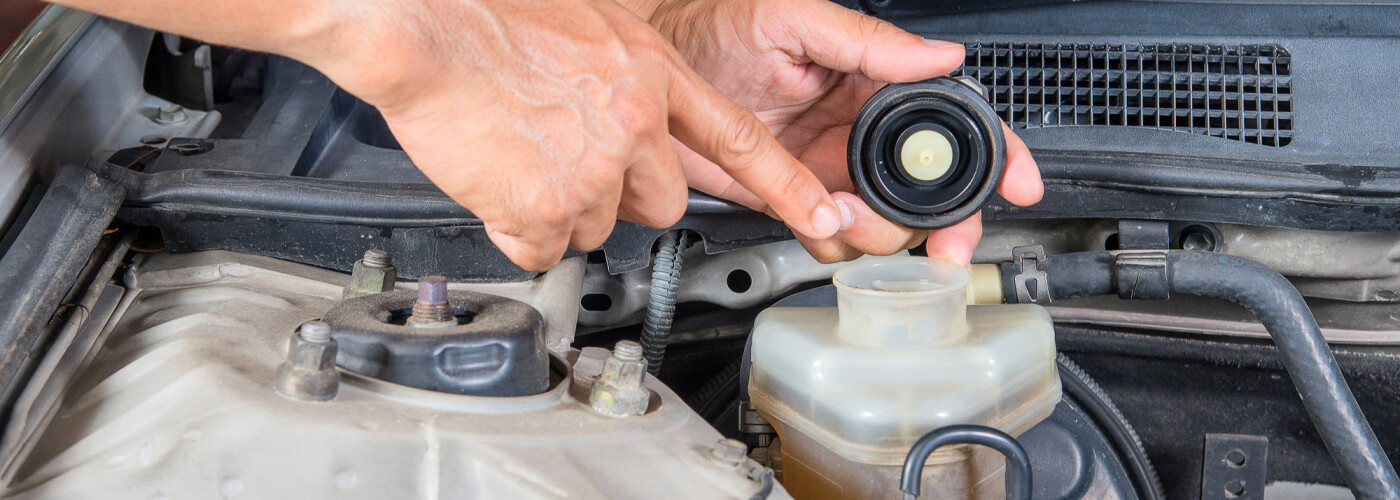
- How to check brake fluid: The fluid level should reach the marking on the side of the clear brake fluid reservoir in the engine compartment.
Engine Coolant
- Purpose of engine coolant: Optimizes temperature in your vehicle’s cooling system and engine.
- When to replace engine coolant: Every 30,000 to 50,000 miles.
- How to check engine coolant: The fluid level should reach the marking on the side of the engine coolant reservoir underneath your car’s hood. However, coolant can deteriorate over time, so even if tests show that your coolant is still adequate and you have enough of it, you may still want to replace it.
Transmission Fluid
- Purpose of transmission fluid: Lubricates the moving parts in your transmission to ensure fast and smooth gear shifts. Manual and automatic transmissions use different types of transmission fluids.
- How often to replace transmission fluid (for cars with automatic transmission): Every 30,000 to 100,000 miles. Some vehicles now come with “lifetime fluid” that purportedly doesn’t need to be replaced, but considering how expensive it is to replace your transmission, flushing and changing the transmission fluid every so often is a small price to pay.
- How to check transmission fluid (for cars with automatic transmission): Remove and re-insert the transmission fluid dipstick into the reservoir. Pull it out and observe the level of fluid. Check that the fluid color is translucent dark red. If your car has a sealed transmission, bring it to a Independence-area service center to get inspected.
Power Steering Fluid
- Purpose of power steering fluid: Ensures proper function of the power steering hydraulic system, which multiplies the force you exert on your steering wheel.
- When to replace power steering fluid: As needed, when your vehicle becomes difficult to steer, you hear a whining noise from the power steering pump, or the power steering system needs frequent service. Generally, it is recommended that you change the power steering fluid in your car every 4 years or 50,000 miles.
- How to check power steering fluid:Find the reservoir under your car’s hood marked with a steering wheel or the words ‘power steering fluid,’ or it might be a steering wheel symbol. Make sure the fluid reaches the marked level.
Windshield Wiper Fluid
- Purpose of windshield wiper fluid: Increases the efficacy of your windshield wipers for clearer glass.
- When to replace windshield wiper fluid: As needed, when no fluid comes out of the sprayers on your windshield.
- How to check windshield wiper fluid: Open the hood and find the reservoir with a windshield washer symbol on the cap.
Learn More About Essential Car Fluids With Tom Gill Chevrolet
If you have questions about how to check essential fluids in your car or other DIY car care topics, we’re happy to help! Contact our service center to speak with a technician today. Looking to buy high-quality new windshield wiper fluid or brake fluid near Burlington? Order parts, accessories, and auto maintenance supplies online or make your purchase at our service center in Florence.
More from Tom Gill Chevrolet
At Tom Gill Chevrolet, we’ve called Florence home since 1996, and this town has given us far more than customers. It’s given us neighbors. Florence sits in Boone County, part of the Greater Cincinnati area, and it’s the second-most populous city in Northern Kentucky at roughly 34,000 people, growing a little over 1% a year….
Read More
Running a fleet or a single work truck comes down to one question: does the vehicle actually fit the job? The commercial truck market around Florence, KY includes several manufacturers competing for fleet business. That variety is good for buyers, but picking the right truck takes more than a quick lot walk. At Tom Gill…
Read More
That little orange engine icon on your dash has a way of ruining an otherwise good drive. Whether you’re commuting on I-75 or running a work truck for your business, seeing it pop on raises an immediate question: keep driving, or pull over now? This guide breaks down what the check engine light means, walks…
Read More